Is your school body respectful? Three things to check this week
Plenty of schools want to help children feel better about their bodies. Knowing where to start is the hard part.
Often the first instinct is a lesson, an assembly or a poster campaign. Those can help, but body image isn’t only taught in lessons. Children absorb it every day from the culture around them: what the adults say, for example, what gets noticed and praised, and who they see represented on the walls and in the books. A single assembly can easily be undone by a week of everyday comments that point the other way.
So a good place to start is to look honestly at that everyday culture. Here are three things any school can check this week. None of them need a budget, a new resource or a training day. They just need a bit of noticing.
1. The staffroom
Spend a week listening, without judgement, to how bodies and food get talked about among staff. You might hear diet talk (“I’m being good today”, “I really shouldn’t”), comments about weight, congratulations when a colleague has lost weight, or jokes about our own bodies. Most of us say these things without thinking - they’re woven into everyday conversation and are often as much a part of our culture here in the UK as small talk about the weather.
Why it matters: children overhear far more than we realise, in corridors, at lunch, on trips and in the gaps between lessons. Staff are some of the most influential adults in a child’s life, and the way we talk about our own bodies quietly teaches children how to think about theirs. If a teacher calls themselves “naughty” for eating a biscuit, a child learns that food is something to feel guilty about.
2. What gets praised
Next, notice what children get complimented on, by staff and by each other. How often is it about appearance? “You look so pretty today.” “Haven’t you grown!” “Love your new haircut.” These comments are almost always kindly meant, and on their own they’re not necessarily harmful. But when appearance is what gets noticed most, children learn that it’s what matters most.
Why it matters: praise is one of the clearest signals a school sends about what it values. Children who are regularly praised for their looks can come to feel that their worth depends on them, and children who rarely receive that kind of comment notice that too.
What to try: shift the balance rather than banning anything. Praise effort, ideas, curiosity, kindness and what bodies can do, such as running, dancing, building or helping. When children compliment each other’s appearance, it can be a natural moment to widen the conversation: “That’s kind. What else do you like about your friend?” Watch out too for comments about changing bodies, which can feel especially exposing for children approaching or going through puberty.
3. Visual language of the school
Finally, take a walk around the school and look at what’s on display. Look at the posters, the displays, the library and book corners, and the images in your teaching resources. Who’s in them? Do they show bodies of different sizes, shapes, skin colours, abilities and ages? Or does one kind of body dominate?
Why it matters: children notice who’s missing. If the only bodies they see in a positive light are thin, white and non-disabled, many children will quietly conclude that their own body doesn’t belong. It’s also worth looking closely at health and food displays (and school food policies can, in some cases, perpetuate and plant seeds that build into unhealthy relationships with food). Labels like “good” and “bad” foods, or messages linking weight to health, can land very differently from how they were intended.
What to try: do the walk with a group of pupils. Children are often far sharper than adults at spotting what’s missing, and asking them is a powerful message in itself. It tells them their view of their school matters. Over time, swap in images, books and resources that show a much wider range of bodies, so every child can see themselves.
What the checks tell you
If you’ve done all three, you may have spotted opportunities to start your body respect culture building work. None of this is about blame. These patterns come from the wider culture we all live in, not from any one person or school. Noticing them is the first step to building a culture of body respect in your school.
What next
These checks are a start, not a fix. Lasting change comes from working on the whole culture of a school at once, so that what children hear in lessons matches what they experience in the corridor, the dinner hall and at home.
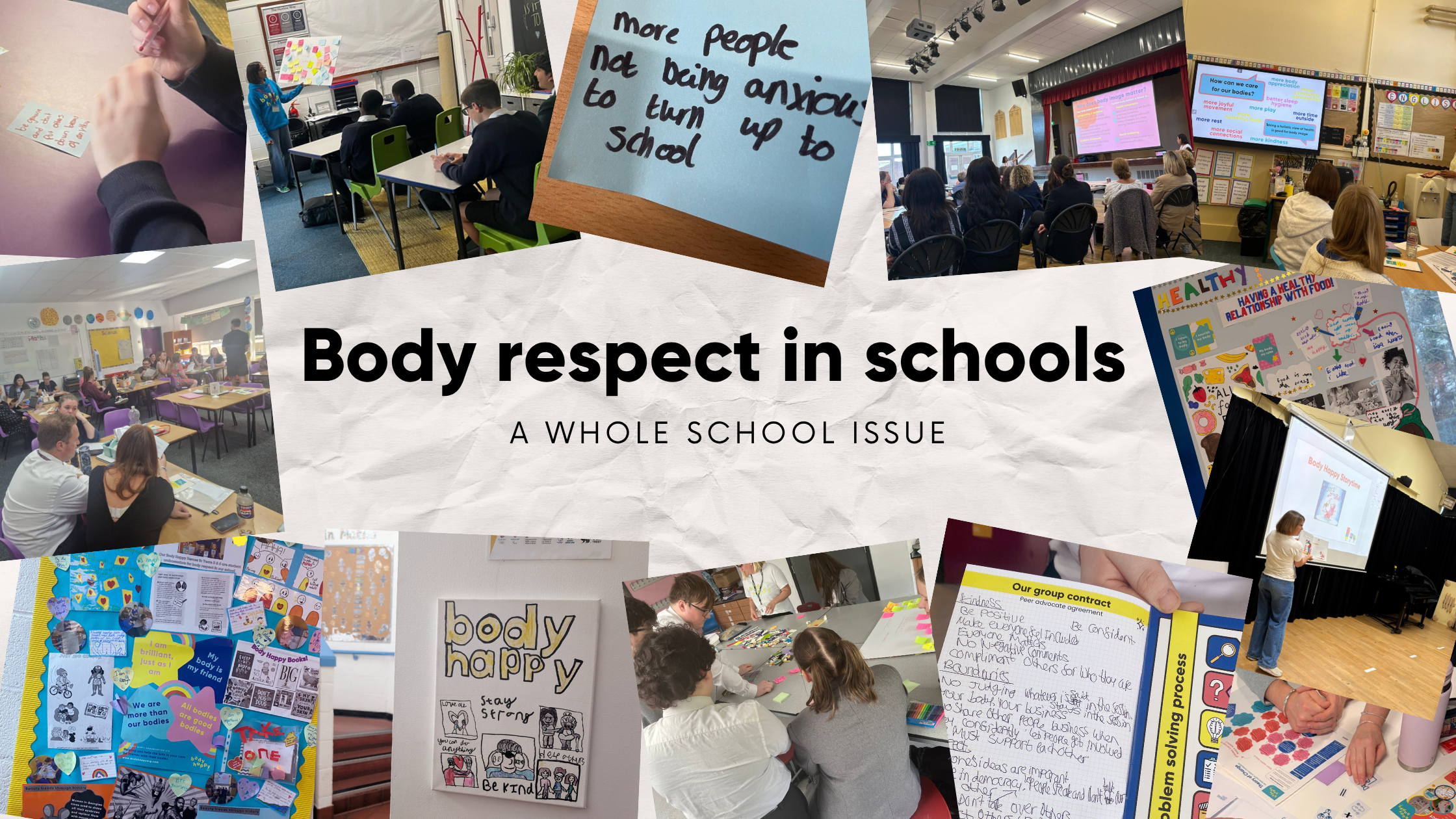
That’s what our whole school programme does. It brings together in-person training for staff, workshops for pupils across the school, a peer advocacy programme led by students, curriculum resources, and workshops and support for parents. It’s all built on our four Body Happy Skills: Literacy, Resilience, Kindness and Advocacy.
We work with schools directly, and in partnership with local authorities to reach schools across whole areas. If you’d like to talk about what that could look like for your school or your area, get in touch: hello@bodyhappyorg.com
Don’t forget! We’re running a bonus 45 minute CPD session - free to all our partner schools - for Anti-Bullying Week on 17th November. Find out more about our “Body Respect - Keeping the Conversation Going” session and how to get a ticket below.
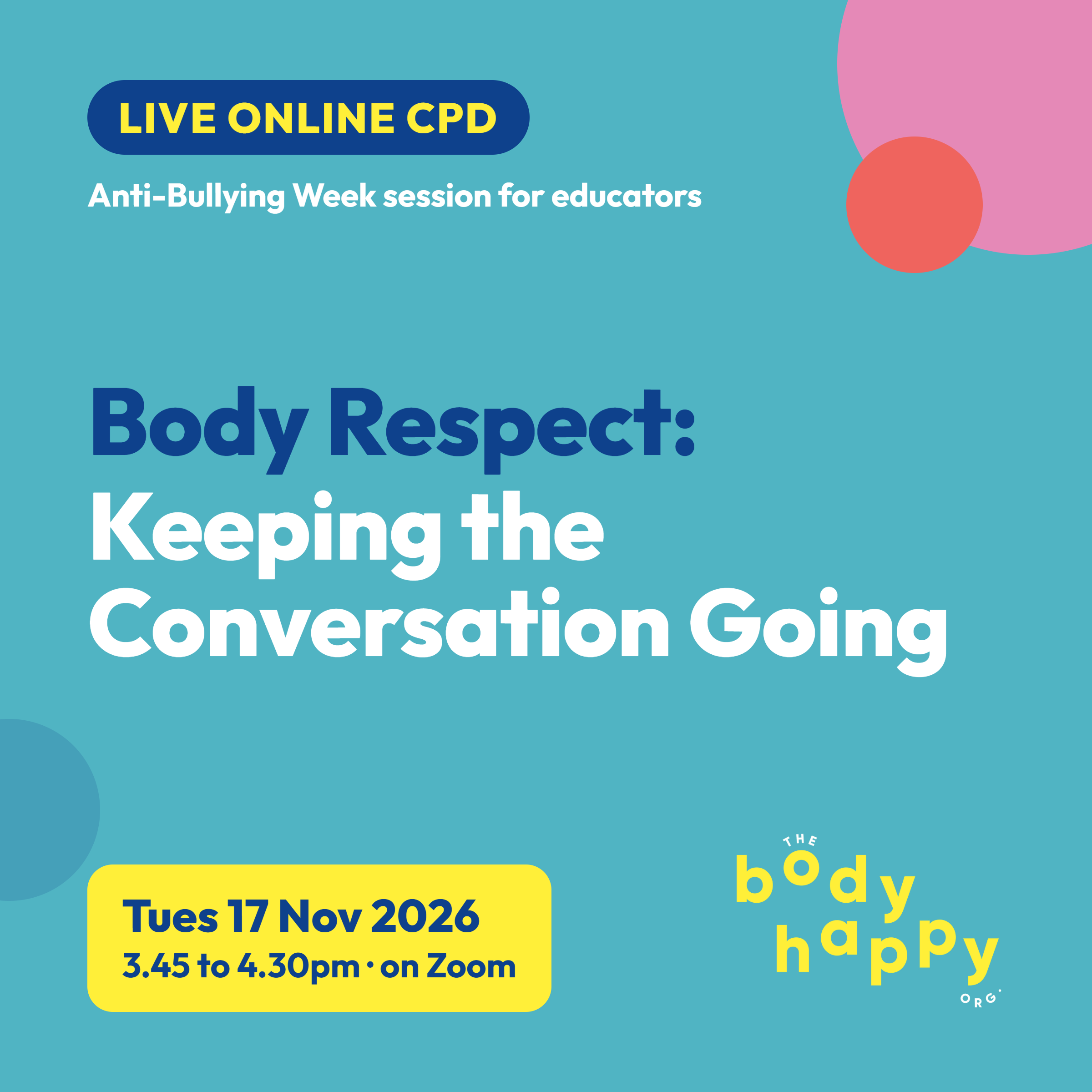
Tuesday 17 November 2026, 3.45pm to 4.30pm, on Zoom
A 45-minute online CPD session for primary and secondary educators on leading respectful classroom conversations about body respect. Part of Anti-Bullying Week 2026.
Free for Body Happy Schools Programme partner schools and all schools in North Northamptonshire. Use the code from your email at checkout.
💛💛💛
Conversation sits at the heart of everything we do. Exploring ideas together, rather than being talked at, is how attitudes to body image start to shift, and it’s what makes our work relational.
But leading a discussion on body image can feel like a daunting ask, even for experienced teachers. What if a pupil says something unkind? What if the conversation goes somewhere you didn’t plan?
This bonus session gives you practical tools to open up those conversations with confidence. Respectful conversations build a culture of body respect, and a culture of body respect helps tackle appearance-related bullying.
In 45 minutes, you’ll:
Look at how to create the conditions for a good conversation, including group agreements built on respect, kindness and empathy
Explore a model for classroom discussion rooted in Philosophy for Children (P4C)
Practise four simple facilitator questions that keep a conversation going without leading it
Try them out with open questions on body image and identity
Leave with one thing to try in your classroom the next day
Who it’s for: teachers, teaching assistants, PSHE leads, pastoral and safeguarding staff, and anyone leading discussions with children and young people. Suitable for primary and secondary.
Your facilitator: Emma Leeson (she/her) is a Body Happy Org facilitator as well as a Training and Resources Lead for a national charity and a qualified teacher. She’s also a P4C facilitator and trainer with over 20 years’ experience, and creates resources that encourage critical thinking. At Body Happy Org, she delivers virtual and in-person workshops for students, teachers and parents/caregivers.
Good to know:
Live on Zoom. You’ll receive the link via email after booking, and a reminder on the morning of the session.
The session will be recorded. The session will be recorded. It’s an interactive session, so it works best with cameras on if you’re comfortable with this.
One place per person. Booking for several colleagues? Add one place for each.
Not sure if your school has a free place? Email us at hello@bodyhappyorg.com.
We can also offer invoicing if preferred. If you’d like to book your space and have us issue an invoice to your school, please email us at hello@bodyhappyorg.com