
Building body respect means tackling inequality too
As children settle back into school life, our PhD researcher Lulu Tacconelli is thinking about what can make the adjustment to a new year even harder. One of the toughest challenges is socioeconomic disadvantage, which has a big part to play when it comes to body image too.
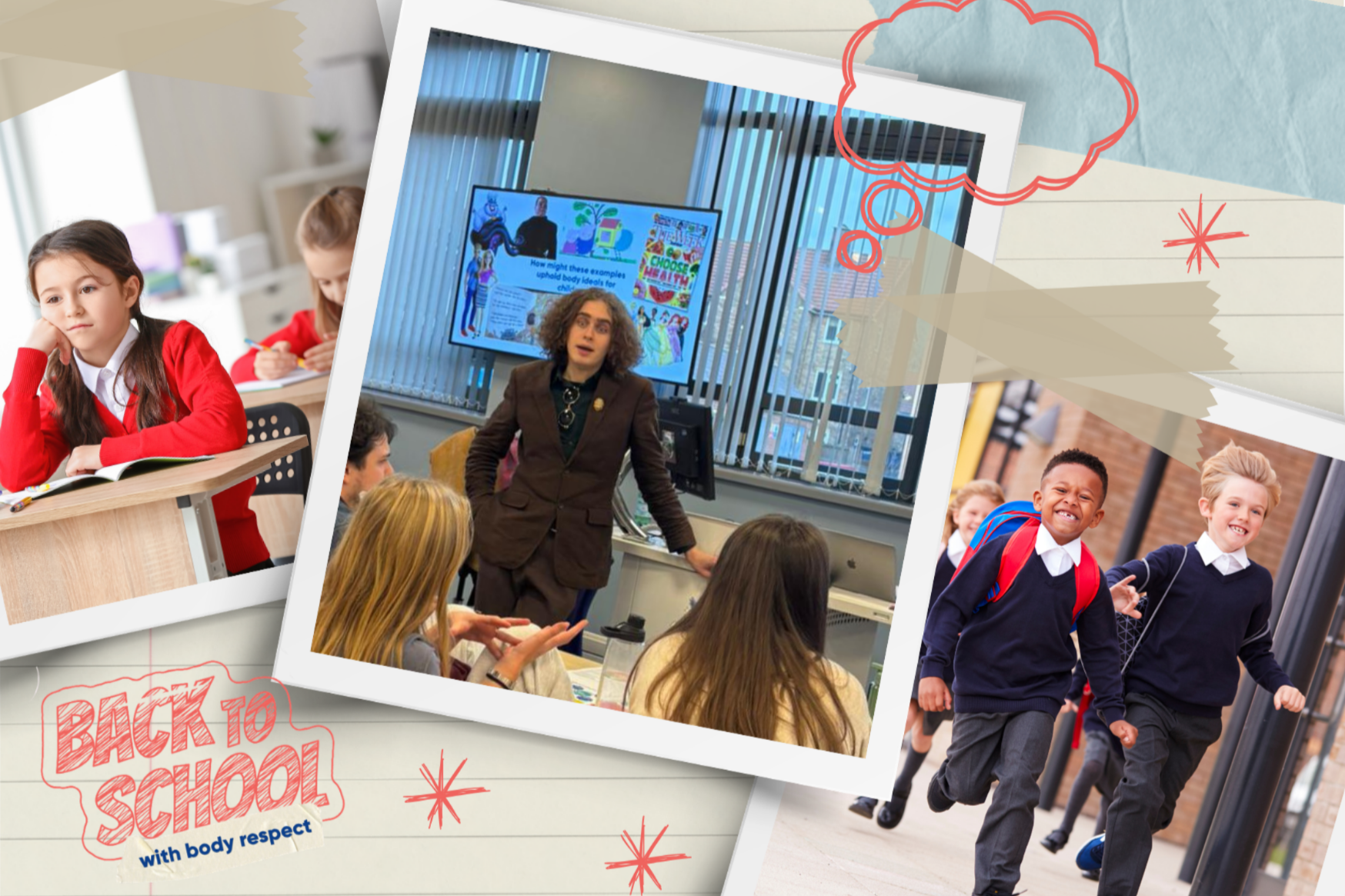
With young people coming into a new year at school, I’ve been thinking a lot about how the children I used to work with are doing. By now, they will have just started year 7, which can be a scary time for anyone. But for a child with existing body image issues, this new environment can create even more stress that they turn inwards into body dissatisfaction.
We know that this is not an uncommon experience for young people, but one which is becoming more widespread year after year. Their peers can reinforce high standards of appearance. Policies around lunchtimes can create harmful ‘food rules’ which assign food into ‘good’ and ‘bad’ categories. And PE kits can be uncomfortable and poorly-fitting, making young people self-conscious and putting them off physical activity.
Tipping the odds
However, for many children, the odds are further tipped against them by factors outside their control. For one, their living situations may present increased risks to their mental health. Food insecurity and low family income are both associated with a greater risk of poor body image and disordered eating in young people.
This is an integral part of why body image is a ‘we’ issue, not a ‘me’ issue. Our broader social, economic and political situations create the environments in which children develop. So, when those environments are scaffolded with negative experiences around food, bodies and physical activity, and fail to give young people the skills to fight back against negative influences, body image issues become the norm.
Socially disadvantaged young people feel the impacts of these inequalities the most acutely. We know that both lower socioeconomic status and poor body image are linked to lower school attendance and academic attainment. In this way, poor body image should be framed as an ongoing issue of education equality.
Reducing inequality
With this in mind, it becomes ever more crucial to reduce these inequalities because they can significantly impact young people’s lives and career prospects. We can’t fix the economy overnight, but we can try to change the culture in schools, where young people spend much of their time and get their first proper taste of community. Giving them proper support and tools to advocate for themselves can go a long way to prevent the development of body image issues later down the line.
Work is being done to close this gap. By the time you read this, I will have taken the first concrete step in my PhD studies to evaluate the impact of the Body Happy Schools Programme: baseline data collection. This will give us a starting point that we can look back on after the programme has been delivered so we can make comparisons over time.
It will also let us compare between students. For example, we can ask questions such as “do students who start the intervention with poorer body image see more of an impact than students who start with a more positive body image?” In this way, we can identify the ways in which the Body Happy Schools Programme can help the students who need it the most while supporting the entire school. But on the other side of the coin, we can highlight the areas where we need to improve in our mission to make the school experience a more equal one full of body respect.