
From the classroom to the Commons: what happens when young people get a seat at the table
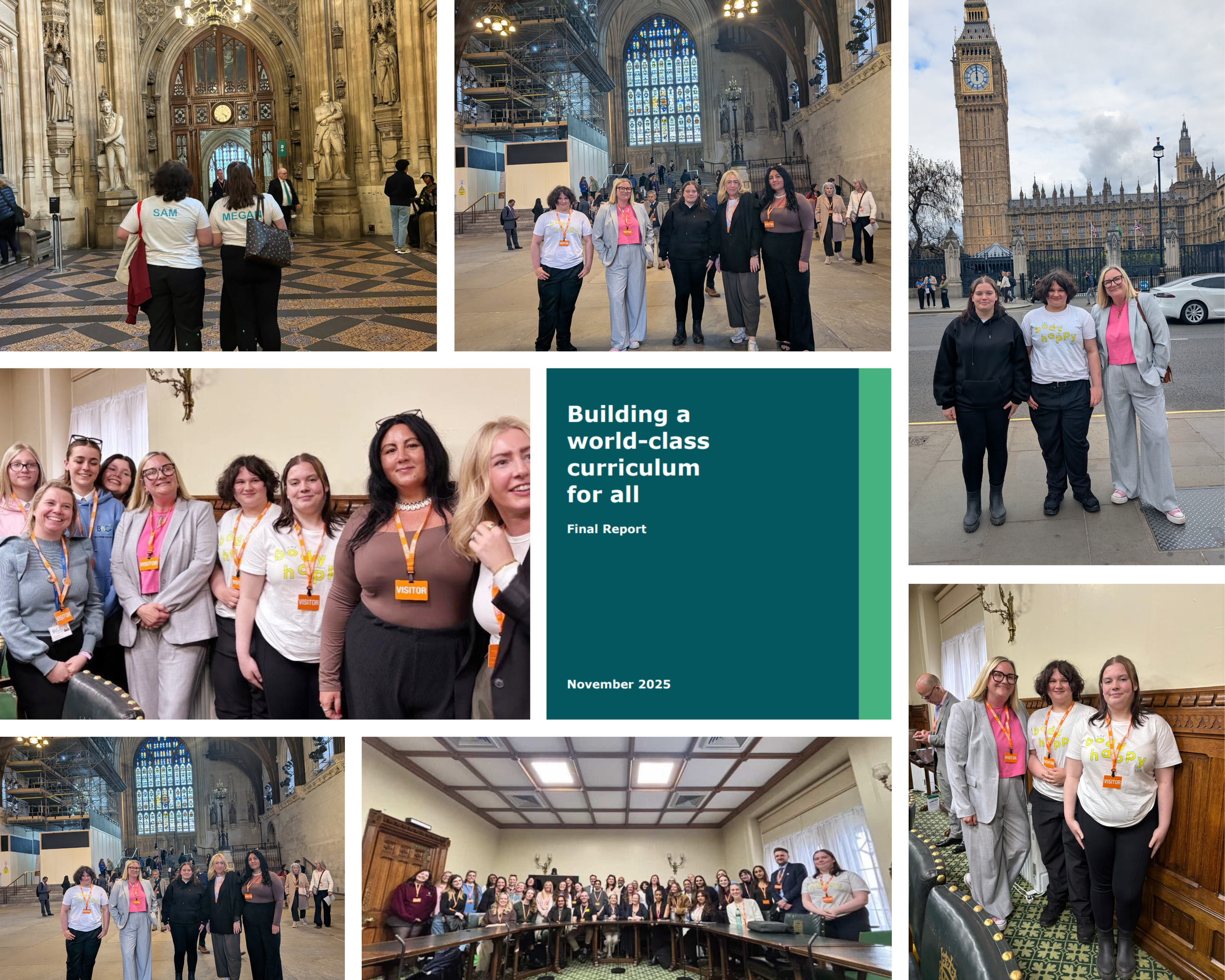
When the Body Happy Org was invited to the APPG for Eating Disorders Education Round Table at Westminster, we knew we couldn’t do it alone. The whole point of our work is the young people at the centre of it, so we brought them with us.
Pupils and teachers from both our Body Happy Schools Programme pilot schools, All Saints Academy Plymouth and Brighton Aldridge Community Academy, joined us in parliament on 20 April. The meeting brought together people from across the education system to talk about one of the most urgent and under-addressed issues in children's health: how schools can play a much bigger role in eating disorder prevention.
For one of the five students it included a lot of firsts. Sam is a Year 11 peer ambassador from All Saints Academy Plymouth. At the start of the programme they told us they would never speak in public. Today was their first time in London, their first train journey, and they stood in a room of politicians, clinicians, researchers and policy makers and held it.
“When young people are given the space, the tools and the trust to lead, they do,” says Body Happy Org founder Molly Forbes. “This is why Body Happy Org exists. Not to speak about young people, but to create the conditions where they can speak for themselves and be heard by the people with the power to act. Prevention that doesn't include young people in its design is missing the point. This round table was a reminder of that, in the best possible way.”
Why this matters NOW
Around half of primary teachers say they see signs of eating disorders in their schools and 78% of secondary teachers report the same. Prevention is vital. But it must go beyond individual behaviour.
Molly spoke about why prevention strategy has to address the culture and environment around children. From how food is taught in classrooms, to how bodies are talked about in PE, to the fact that weight stigma barely features in most anti-bullying frameworks.
One of the most important environments is the school dinner hall. Clear plate policies, in which children are expected to finish everything on their plate regardless of hunger, are still common in primary schools. In some settings, older pupils are deployed to monitor the eating of younger children. These are everyday practices that are rarely examined through an inclusion lens. For children who are neurodivergent or who experience challenges around food, including those with ARFID, they can be particularly harmful.
The same scrutiny applies more broadly. There is currently nothing to prevent diet clubs from hiring school halls or weight-loss companies from advertising on school gates. We already restrict the marketing of foods high in fat and sugar near schools. The same logic should apply to commercial weight-loss messaging aimed at children.
None of it is malicious. All of it is changeable. But change requires these practices to be named, examined and acted on, which was what this round table was about.
The timing matters
The new Ofsted framework foregrounds wellbeing and belonging. The Curriculum and Assessment Review broadens the purpose of PE, expands food education, and identifies media literacy and oracy as priorities. All of this is directly relevant to how young people navigate appearance pressure, health misinformation and online harm. It also includes recommendations around SEND provision and inclusion, recognising that a one-size-fits-all approach isn't working for children with additional needs.
This work isn't an add-on to what schools are already doing. It's aligned with what schools are already working towards: belonging, inclusion, safeguarding, equality. The question is whether eating disorder prevention gets named explicitly within these frameworks or gets left out again.
At the round table, staff from our pilot schools spoke honestly about the realities of school life: the lack of statutory time for PSHE, competing demands, limited funding. But they also talked about what it looks like when a young person finds a safe person in school. That relationship, they said, can be everything.
Together , we urged that a one-off assembly doesn't change culture. Whole-school, sustained, embedded approaches do. And when schools can see that this work is already aligned with their priorities, it stops being another initiative and starts being part of how they do things.
