
Beyond the classroom: why building cultures of body respect has to be a shared effort
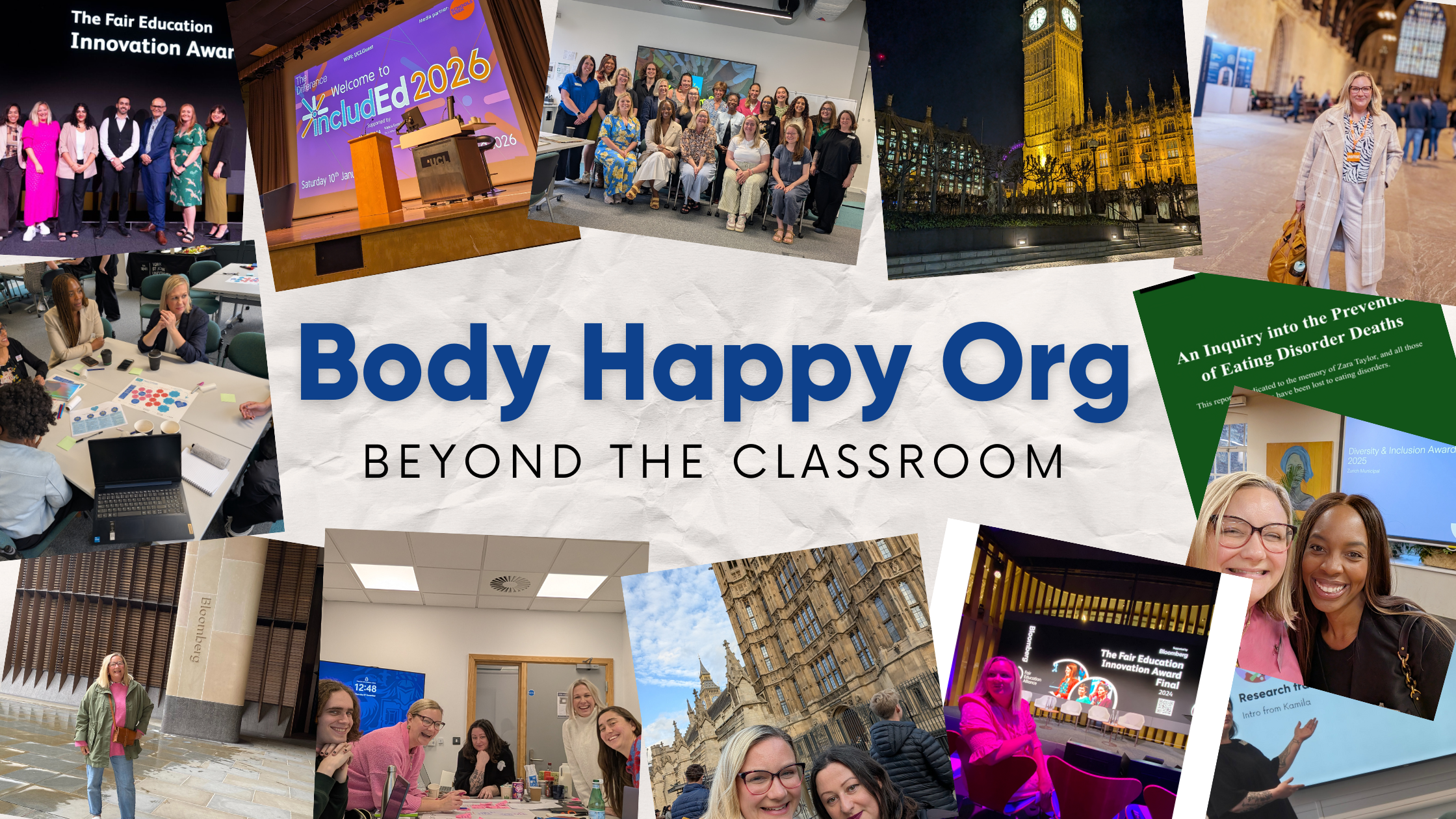
At The Body Happy Organisation, most people know us for our work in schools – delivering workshops, CPD, schemes of work and peer advocacy through our Body Happy Schools Programme, supporting children and young people to build respectful relationships with their bodies and to respect the bodies of their peers.
But delivery is only one part of what we do.
If we are serious about building classroom cultures of body respect – and about preventing harm before it takes hold – then this work has to go beyond individual lessons, schools or even sectors. It has to be collaborative, cross-disciplinary and rooted in wider system change.
That’s why, alongside our direct work with schools, we actively contribute to national conversations across education, health and safeguarding, and work in partnership with organisations who share our commitment to prevention, inclusion and equity.
Contributing to national policy and prevention work
We are proud to be actively involved in policy-level work that strengthens the case for early, preventative approaches to body image, weight stigma and eating disorder prevention.
We are proud to support the work of the All-Party Parliamentary Group on Eating Disorders, and contributed to their most recent report, An Inquiry into the Prevention of Eating Disorder Deaths. The report highlights the urgent need for upstream, whole-system approaches – including education – rather than relying solely on crisis intervention once harm has already occurred. We continue to support this work with more planned activities this year, alongside the APPG Secretariat, Dump the Scales.
Our Executive Director, Molly Forbes, sits on the Expert Working Group for the Centre for Digital Information Literacy in Schools, run by the National Institute of Teaching. This work recognises the growing impact of digital environments – from social media to algorithmic content – on children’s wellbeing, identity and sense of belonging.
Both of these roles reflect something we see every day in schools: body image, belonging and wellbeing do not exist in isolation. They are shaped by policy decisions, digital systems, cultural norms and power structures far beyond the classroom.
Strengthening the evidence base through research
Alongside delivery and policy work, we are committed to strengthening the evidence base around body image, weight stigma and prevention in education.
We have an active research partnership with the University of Lincoln, including a fully funded PhD focused on body image, education and prevention. This research will explore how whole-school, preventative approaches can support wellbeing, belonging and inclusion – and crucially, what actually works in real school contexts.
Working alongside education, health and safeguarding partners
We also work collaboratively with organisations across education, public health and safeguarding – not duplicating work, but strengthening it.
We are members of the Anti-Bullying Alliance, contributing to shared learning around bullying, stigma and inclusive school cultures.
We support the Inclusion for All campaign, led by The Difference and Impetus, which calls for more inclusive, relational and preventative approaches within the education system.
We support the Our Wellbeing Our Voice campaign calling a national wellbeing measurement programme that ensures children’s wellbeing is taken as seriously as their academic attainment.
We are active members of the Compassionate Approach Practice Group, run by Doncaster Council Public Health Team, contributing to cross-sector conversations about stigma, language and compassionate public-health practice.
Partnership, not silos
Alongside this, we regularly partner with charities and specialist organisations to amplify impact and avoid working in silos. This includes collaborations with organisations such as South Yorkshire Eating Disorders Association and Kidscape, among others.
These partnerships matter because no single organisation holds all the answers. Sustainable change happens when expertise is shared, voices are amplified and learning flows both ways – between schools, communities, health professionals and policymakers.
Recognition - and responsibility
In 2024, we were proud to be awarded the Fair Education Alliance Innovation Award, recognising our contribution to equity-driven, preventative work in education.
We see this not just as recognition, but as responsibility – to keep pushing for evidence-informed practice, to centre children’s lived experiences, and to ensure body respect is taken seriously as an inclusion and safeguarding issue, not a “nice to have”.
Why this matters
Everything we do – whether in a classroom, a staff training session, a community space or a policy forum – is rooted in the same belief:
Building cultures of body respect is not a one-off intervention. It is long-term, relational work that requires collaboration across education, health and wider society.
By working beyond delivery, we aim to ensure that what happens in classrooms is supported by the systems around them – and that children and young people are not asked to navigate harmful cultures on their own.